The Atlanta Travel Associates
"Some pursue happiness, We Love to create it!"
770-656-8668
"Some pursue happiness, We Love to create it!"
770-656-8668

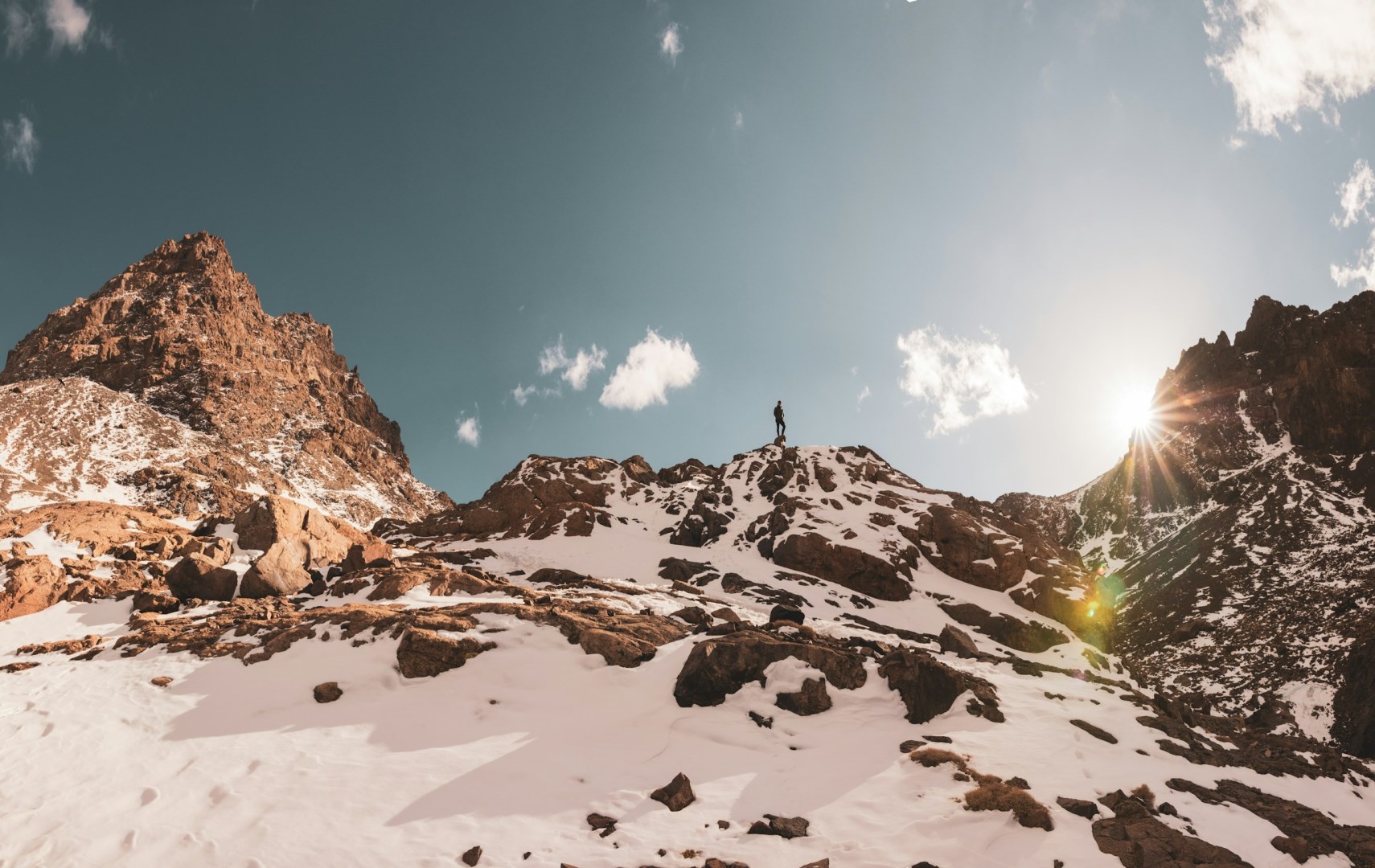
Jbel Toubkal is the highest mountain in Morocco and the highest peak in North Africa, rising to 4,167 meters in the High Atlas Mountains. It stands within Toubkal National Park, south of Marrakech, above valleys and Amazigh villages including Imlil. The mountain is surrounded by steep ridges, rocky slopes, high-altitude valleys, and seasonal snow. Toubkal is best known as a trekking destination, with routes leading from Imlil toward mountain refuges and then to the summit. Its elevation and rugged terrain give the area a distinctly alpine character despite its location in North Africa.
The landscape around Toubkal is closely connected to Amazigh communities whose villages occupy the valleys surrounding the mountain. Agriculture and livestock farming remain important parts of life in the High Atlas, with terraced fields and orchards appearing around settlements where water is available. Imlil serves as a major starting point for treks and has long provided services to people traveling through the mountains. Traditional stone and earthen houses, local markets, and mountain hospitality are visible throughout the area. The region's cultural identity is therefore closely linked to its highland environment and long-established rural communities.
The standard ascent of Toubkal begins around Imlil and follows mountain trails through the Aït Mizane Valley toward high-altitude refuges. From there, the route climbs across steep scree and rocky slopes to the summit ridge. On clear days, the summit provides wide views across the High Atlas and the valleys below. Toubkal National Park protects a varied mountain environment that includes juniper and oak vegetation at lower elevations, along with high mountain habitats farther above. Golden eagles, Barbary sheep, and other wildlife can be found in parts of the park.
Food around Toubkal reflects the cooking of the High Atlas, with tagine, couscous, lentils, fresh bread, and mint tea commonly served in Imlil and mountain guesthouses. Local produce can include apples, walnuts, almonds, and other crops grown in the surrounding valleys. Trekkers often encounter simple meals prepared by village families or served at mountain refuges along the ascent. A notable feature of Toubkal is the rapid change in scenery during the climb: cultivated valleys and villages give way to sparse high-altitude terrain, allowing a single route to pass through several distinct mountain environments.